A Legal Victory and Its Implications for Gun Owners
The recent dismissal of the ATF pistol brace rule marks a turning point in the ongoing debate surrounding firearm regulations. On July 17, 2025, the Trump Administration’s Department of Justice agreed to dismiss its appeal in Mock v. Bondi. This move officially ends the regulatory battle that threatened to reclassify millions of legally owned braced AR pistols as short-barreled rifles, an action that many argued not only overstepped legal boundaries but also ignored the practical realities faced by lawful gun owners.
In this opinion editorial, we will take a closer look at the history behind the regulation, dig into the legal challenges that eventually led to its downfall, and explore what this means for the future of firearm regulations. We will also present an analysis of the key events through tables and bullet lists to help figure a path through the tangled issues that have characterized this saga.
Tracing the History: From Approval to Overhaul
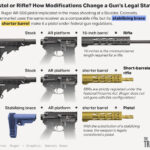
Pistol braces were originally designed with a clear and focused purpose: to help disabled veterans and others with limited mobility stabilize AR-style pistols for more accurate shooting. The idea was straightforward and widely accepted; it was seen as a simple solution that improved the usability of these firearms for a segment of the population that might otherwise be excluded from enjoying their Second Amendment rights.
In 2012, the ATF (Bureau of Alcohol, Tobacco, Firearms and Explosives) approved the use of pistol braces without altering the legal classification of the firearm. This approval provided clarity and assurance that owners could legally use these braces without fear of future repercussions. However, what followed in subsequent years were a series of regulatory flip-flops that introduced severe legal uncertainty into an area that should have remained straightforward.
Timeline of Regulatory Changes
Below is a table summarizing the key moments in the regulatory timeline of pistol braces:
| Year | Event |
|---|---|
| 2012 | ATF approves pistol braces as accessories that do not alter a pistol’s classification. |
| 2014 | ATF reiterates that having a braced pistol is permitted, affirming that the presence of a brace does not convert a pistol into a short-barreled rifle. |
| 2015 | The agency begins to signal a potential change by suggesting that shouldering a braced pistol could have legal implications. |
| 2017 | Inconsistent messages flow from the ATF, leaving many confused about the correct legal interpretation. |
| 2021-2023 | The Biden Administration attempts to address these tangled issues by rolling out a new, subjective rule that many view as overreaching. |
| 2025 | With the dismissal of the appeal in Mock v. Bondi, the questionable rule is officially dead, ending years of legal uncertainty. |
This timeline not only reflects the twists and turns of regulatory policy but also highlights the challenges that law-abiding citizens faced in trying to conform to rules that were constantly in flux.
Understanding the Legal Arguments and Court Decisions
The legal challenges to the pistol brace rule were built upon several key arguments. Critics of the new rule contended that it was full of problems, largely because it was based on vague and subjective criteria. Without clear and explicit definitions, the rule left everyday citizens struggling to figure a path through what many saw as an intimidating maze of bureaucratic language.
Vague Criteria and Subjective Discretion
One of the most significant issues raised in the court challenges was the subjective nature of the rule’s criteria. Initially, the proposal had included a point system that allowed gun owners to assess their risk of inadvertently breaking the law. However, the final rule abandoned that structured approach in favor of discretionary language that could potentially criminalize activities that had long been deemed legal.
- Criteria included factors such as firearm weight, barrel length, and the type of optics mounted.
- The subjective language made it difficult for the average person to determine whether their firearm complied with the rule.
- This led to widespread concerns that citizens might be penalized despite adhering to previously accepted legal standards.
The courts were quick to notice that the fine points of the rule bore little resemblance to the original feedback provided during the public commentary phase. Federal judges from several circuits eventually ruled that the ATF had stepped beyond its authority, deeming the rule arbitrary and capricious. As one critic put it in court, the system was “nigh impossible for a regular citizen to determine what constitutes a braced pistol.”
Court Rulings and Legal Precedents
The combined efforts of gun rights organizations and court challenges played an essential role in overturning the rule. Here are some notable legal decisions:
- Fifth Circuit Court of Appeals ruled that the rule violated the Administrative Procedure Act due to its confusing bits and subjective test.
- A Federal District Judge in Texas, Reed O’Connor, completely vacated the rule on the grounds that it was arbitrary and unreasonable.
- The Eighth Circuit also issued a ruling that further underscored the inconsistencies and punitive nature of the rule.
The collective interpretation from these decisions was that government agencies must abide by a clear legal process and that rules affecting constitutional rights should never be left to vague standards that can trap law-abiding citizens in a legal quagmire.
Assessing the Impact on Millions of Law-Abiding Gun Owners
The practical effects of the pistol brace rule were not just theoretical concerns—they had real-world consequences. When the rule took effect, gun owners found themselves forced to reconcile with a host of challenging choices. Each option was fraught with its own set of intimidating hurdles:
Compliance Options and Their Challenges
Once the rule was implemented, owners of braced pistols were left with the following choices:
- Register the pistol as a short-barreled rifle, an action that brought significant delays, extra paperwork under the National Firearms Act (NFA), and an additional tax fee of approximately $200.
- Remove the pistol brace and modify the firearm, a process that could compromise the original purpose of the brace and leave some users, especially those with physical limitations, without an accessible option.
- Destroy the firearm entirely, which for many represented a drastic and unreasonable loss of a legally owned asset.
Each of these options represented not just an administrative inconvenience, but also a potentially serious infringement on a right that many Americans hold dear. The compliance window set by the government was far too short, with gun owners given only a limited period—until May 31, 2023—to decide on a path forward. This led to widespread non-compliance, with estimates suggesting that even the most conservative figures placed the rate at a dismal less-than-1%. When nearly all those affected choose non-compliance, it clearly signals that workers on the ground simply cannot make their way through the overwhelming and confusing bits of the new requirements.
The Broader Implications for Gun Ownership and Regulation
Beyond the immediate administrative challenges, the situation brought up several fine points regarding firearm regulations in general. Critics argue that the pistol brace rule was just one example of a trend in which regulatory agencies impose changes without sufficiently considering the real-world effects on citizens. This regulatory ping-pong has led to a climate where even well-intentioned measures can end up disrupting the lives of millions.
Gun owners, in particular, were hit with a sense of betrayal. The legislative history shows that the original design and approval of pistol braces was meant to support Second Amendment rights, not to introduce new penalties for a feature that had long been accepted. This experience is a textbook case in how government overreach in the realm of regulations can create an environment of uncertainty and distrust.
Government Overreach and Unintended Consequences
One of the recurring criticisms of the pistol brace regulation is that it exemplifies government overreach—a phenomenon that is full of problems when rules are based on arbitrary decisions rather than clear statutory mandates. The trajectory of this rule reflects a broader pattern where agencies, seemingly driven more by political ambition than by objective legal reasoning, introduce changes that are hard to predict or follow.
Political Motivations and Policy Reversals
At the heart of the controversy was a political decision. During meetings with the Biden transition team in 2020, some ATF officials identified pistol braces as a primary regulatory target. This signaled an intent to alter long-standing firearm policies in a way that would affect millions of gun owners. The eventual publication of the rule in January 2023 was seen by many as less a carefully constructed legal measure and more a politically motivated strategy aimed at undermining established rights.
What followed was a series of policy reversals that left many feeling that the government was more concerned with scoring political points than with upholding clear legal principles. Many argue that such backward-and-forward policy maneuvers distract from addressing the tricky parts of other pressing issues. Ultimately, the courts had to step in to correct this overreach—underscoring the importance of having an independent judiciary to check executive moves.
Lessons on Rulemaking and Administrative Process
This case offers several key lessons about how rules should be crafted and implemented:
- Rules that affect constitutional rights must include clear, objective criteria to avoid ambiguity.
- Agencies must adhere to established principles under the Administrative Procedure Act to prevent regulatory tangles.
- A transparent process that incorporates public feedback is essential for maintaining trust among the citizenry.
These lessons are especially critical for agencies like the ATF, where decisions do not just affect bureaucratic procedures but have a direct impact on the ability of individuals to exercise their rights and freedoms.
Key Legal Concepts: Understanding the Administrative Procedure Act
Central to the successful challenge against the pistol brace rule was the application of the Administrative Procedure Act (APA). The APA is a key piece of legislation designed to ensure that federal agencies follow a fair process when creating and enforcing regulations. When agencies leave the little details to farmer’s discretion and introduce subjective language, they not only create legal uncertainty but also risk contravening this essential statute.
What the APA Requires
The APA sets out several crucial requirements for administrative rulemaking:
- Clear and precise language outlining the scope of the regulation.
- The inclusion of a detailed explanation of the policy changes and the reasoning behind them.
- The provision of opportunities for public comment and feedback, ensuring that affected parties can voice their concerns.
- The avoidance of arbitrary and capricious decisions by ensuring consistency with statutory mandates.
In the case of the pistol brace rule, the failure to meet these criteria was a significant factor in its downfall. Judges noted that the final version of the rule did not include an understandable framework for compliance, thereby violating the APA’s requirement for clarity and transparency. For citizens, this meant that even with the best of intentions, it was almost impossible to figure out whether they were in compliance.
How the APA Serves as a Check on Regulatory Overreach
The APA is designed to protect citizens from sudden, dramatic shifts in policy that are not grounded in clear legal standards. When an agency’s rule is challenged on the grounds of being arbitrary or capricious, the courts must assess whether the agency followed its own procedures and adhered to the statutory requirements. In this instance, several courts found that the ATF had indeed overreached, and by doing so, undermined the trust that the system is supposed to engender between the government and the governed.
Ultimately, the APA serves as a critical mechanism to ensure that every new rule is subject to scrutiny, thereby safeguarding citizens’ rights against sudden and unexpected regulatory changes. It reminds us that even when political winds shift, the law must remain a constant source of stability and predictability.
Implications for Future Gun Control Measures
The dismissal of the pistol brace rule goes beyond the specific case of pistol braces—it sends a strong message about the limits of government authority. The reversal of this regulation highlights the importance of basing policies on robust legal standards rather than political agendas. While opinions vary widely on gun control, the process by which laws and rules are made can have a profound effect on their legitimacy and enforceability.
Balancing Public Safety and Constitutional Rights
In any discussion about firearm legislation, a key challenge lies in balancing public safety with constitutional rights. On one hand, there is a genuine concern about ensuring that firearms are used safely and responsibly, and that dangerous modifications do not fall into the wrong hands. On the other hand, measures taken to enhance public safety should not unnecessarily infringe on rights that have been long recognized by the courts.
This case demonstrates the dangers of disregarding that balance. By introducing a rule that was not only ambiguous but also highly punitive, the government inadvertently set a trap for law-abiding citizens. Rather than fostering an environment of safety and responsibility, policies such as these erode trust and may even drive non-compliant behavior, as evidenced by the extraordinarily low registration rates observed.
The Role of Advocacy and Legal Organizations
The ultimate success in overturning the pistol brace rule was significantly boosted by the efforts of legal organizations and advocacy groups. Groups such as the Firearms Policy Coalition and Gun Owners of America played an essential part by challenging what they saw as an overbroad and unjust rule, and by helping citizens understand the fine points of the legal arguments against it.
- These organizations worked to educate the public about the small distinctions in the legal language used by the ATF.
- They assisted gun owners in filing lawsuits and in gathering evidence to support claims of regulatory overreach.
- Their involvement was pivotal in ensuring that a system designed to protect the public from arbitrary government actions was upheld.
This case stands as a reminder that proactive legal engagement is critical. When citizens, along with well-organized advocacy groups, take the initiative to hold government agencies accountable, they can ensure that regulations do not stray too far from the statutes that are meant to protect them.
Understanding the Broader Context of Firearm Policy
The ATF pistol brace rule is not an isolated incident. It fits into a broader tapestry of legislative and regulatory efforts that have stirred heated debates across the country. When lawmakers and regulatory agencies introduce changes in firearm policy, the decisions can be influenced by a mix of historical context, evolving technology, and shifting political pressures.
The Historical Perspective on Firearm Regulation
For many years, the balance between ensuring public safety and protecting individual rights has been a delicate one. Historically, agencies have aimed to create uniform rules that can be consistently applied across thousands of cases. However, in recent decades, the rapid evolution of firearm technology and changes in the political landscape have introduced a number of tricky parts into the dialogue.
A few significant historical points include:
- The original classification of firearms and accessories was based on very clear functional distinctions.
- Technological advancements have blurred these functional lines, leading to challenges in crafting policies that accurately capture the fine points of modern firearms.
- As technological and societal norms evolve, so too must the legal framework, though this process is often accompanied by considerable pushback from various interest groups.
The pistol brace rule controversy can be seen as a microcosm of the broader challenge: how to adapt regulatory frameworks to changing circumstances without sacrificing clarity or fairness. The mixed messages and subjective criteria of the rule created a recipe for misunderstanding, confusion, and widespread non-compliance.
The Impact of Media and Public Discourse
An interesting aspect of this saga is the role that media coverage played in shaping public perception. While mainstream media outlets often focus on sensational aspects of gun policy, the ground-level reality for many gun owners is much more nuanced. Detailed discussions about the fine points of firearm regulation, including the legal and practical implications of rules like the pistol brace regulation, frequently get lost in broader, politicized narratives.
- Some media sources presented the rule as a necessary step for improved public safety, while others argued that it was a misguided attempt at controlling lawful behavior.
- This divergence in coverage contributed to a polarized public debate, overshadowing the detailed legal arguments that ultimately led to the rule’s overturning.
- For those invested in maintaining a balanced discussion, it remains essential to look beyond the headlines and examine the actual legal documents and court decisions that clarified the rule’s shortcomings.
The dismissal of the case in Mock v. Bondi should serve as a reminder that our legal system is capable of addressing such complicated pieces of policymaking. By relying on the rigor of the judiciary, citizens can ensure that the final say rests not with fleeting political trends, but with the enduring principles of law and justice.
Looking Forward: The Future of Firearm Regulations
With the dismissal of the ATF’s pistol brace rule, gun owners can breathe a sigh of relief. However, this victory is not the end of the conversation—it is merely one milestone in an ongoing journey toward clearer, fairer firearm regulations. It also serves as a key reminder of the necessity for constant vigilance and active engagement in legal processes.
Recommendations for Future Rulemaking
Based on the lessons learned from this case, here are several recommendations for how government agencies might better approach firearm regulations moving forward:
- Clarity Above All: Any new rule should be written in clear, unambiguous language that makes it easy for civilians to understand their obligations. The avoidance of confusing bits and tangled issues should be a top priority.
- Incorporate Public Feedback: Agencies must maintain open channels for public input, ensuring that stakeholders have the chance to voice concerns about potential overreach and impractical requirements.
- Consistent Policy Application: A stable, predictable regulatory environment is essential. Politically driven, back-and-forth changes only serve to breed uncertainty and irritation among the affected public.
- Adherence to Legal Standards: Any new regulation must strictly adhere to the principles laid out in the Administrative Procedure Act and other relevant statutes to prevent future legal challenges.
These recommendations not only apply to firearm regulations but also serve as a broader blueprint for fair and effective rulemaking across many areas of public policy.
The Role of the Judiciary and Public Oversight
The events surrounding the pistol brace rule underscore the importance of an independent judiciary in checking and balancing government overreach. Courts must vigilantly examine whether administrative agencies are following proper legal procedures, and they must step in when agencies deviate from established norms.
For the public, this means that there is always a recourse if regulations are improperly crafted or enforced. Legal oversight and active participation in civic discourse help ensure that regulatory decisions are made in the public’s best interest and that fundamental rights are not jeopardized by hasty policy changes.
This case also highlights the responsibility of policymakers to remain in tune with the needs and rights of everyday citizens. By upholding principles of fairness and clarity, regulators can create a more trusting relationship between government and the public—one that ultimately benefits the legal system as a whole.
Reflecting on a Pivotal Moment in Firearm Regulation
The demise of the ATF pistol brace rule marks what many see as a crucial victory for the principles of due process and constitutional rights. While it represents only one chapter in the broader narrative of firearm regulation, this episode will undoubtedly influence future debates over government authority and individual freedoms.
The Importance of Clear Guidelines
At the heart of the controversy was a rule that was simply too vague for its own good. The final decision to discard the rule came about because it failed to meet the standard of clarity required by existing law. For gun owners, this has been a hard-learned lesson: policies affecting constitutional rights must be clear enough that even those without a legal background can figure a path to compliance.
The dismissal of the rule should reinforce the expectation that all government regulations be grounded in the principle of transparency. Whether it is the fine points of firearm accessories or other areas where individual freedoms are at stake, citizens deserve to have regulations explained in plain language that leaves little room for interpretation.
Staying Engaged and Vigilant
This legal victory, while significant, is also a call to action. It underscores the idea that progress in protecting constitutional rights is often hard-won and requires ongoing public involvement. For gun owners and supporters of clear regulatory practices, the dismissal of the rule is a reminder that consistent vigilance is critical.
Moving forward, citizens are urged to remain informed about changes in the law, participate in public commentary, and support organizations that defend civil liberties. Only through active engagement can we prevent future instances of regulatory overreach and ensure that our government respects both the letter and the spirit of the law.
Conclusion: A Step Toward More Predictable Regulation
In conclusion, the end of the ATF pistol brace rule is more than just a reversal of a controversial regulation—it is a reaffirmation of the principle that laws must be predictable, clear, and fair. For millions of law-abiding gun owners, this decision is a welcome relief from years of regulatory uncertainty and arbitrary policy shifts.
By dissecting the mixed messages, the subjective criteria, and the eventual legal challenges that led to the rule’s demise, we can see that the judiciary ultimately served as an essential check on government overreach. The rulings from multiple courts highlighted the importance of maintaining clear legislative boundaries, ensuring that every citizen has the right to understand and comply with the laws that govern them.
Looking ahead, this case should serve as a super important reminder for both regulators and the public: while government agencies have a duty to protect public safety, they must do so without infringing on the constitutional rights of the people. Clear, predictable rules are the cornerstone of a fair legal system, and when those rules are muddled by arbitrary language, it’s up to the courts—and the vigilant citizens—to step in and restore order.
We are at a juncture where the future of firearm regulation can take a more measured path, one that respects the individuality of law-abiding citizens while addressing legitimate concerns about safety. As legal debates continue to evolve, it is essential that both policymakers and the public remain engaged in ensuring that every new regulation is crafted with care, transparency, and a deep respect for the foundational principles of our legal system.
In the end, the journey through the twisted issues of the pistol brace rule offers a valuable lesson: even when faced with nerve-racking and intimidating changes, the rule of law—and the determination of informed citizens—can prevail. Let this moment be both a celebration of legal clarity and a call for ongoing participation in the democratic process. Maintaining vigilance and holding government agencies accountable are key to ensuring that our rights remain protected in an ever-changing world.
Originally Post From https://www.concealedcarry.com/law/atf-pistol-brace-rule-is-finally-dead-heres-how-we-got-here/
Read more about this topic at
ATF Pistol Brace Rule Tossed After DOJ Drops Appeal
ATF Pistol Brace (Updated 2024) Laws & Regulations